How to Choose a Bespoke Tailor in New York City

New York City has no shortage of shops calling themselves bespoke tailors. The word has been borrowed, diluted, and applied to everything from genuine hand-drafted commissions to digitally adjusted off-the-rack approximations. For a gentleman investing in a garment built to last decades, knowing how to distinguish one from the other is not a matter of preference — it is a matter of getting what you are actually paying for.
This guide outlines the seven criteria that define a genuine bespoke tailor in New York City, and what to look for — and ask — before you commit to a commission.
1. Does the tailor draft your pattern from scratch?
This is the single most important question you can ask. True bespoke tailoring begins with a blank piece of paper. A master tailor takes your measurements — not just chest and waist, but posture, proportion, the way you carry your shoulders, the asymmetries unique to your frame — and hand-drafts a pattern that has never existed before and will never be used for anyone else.
Made-to-measure, by contrast, starts from a pre-existing block pattern that is adjusted to approximate your size. The difference in fit is structural and permanent. No amount of adjustment to a block pattern can replicate what a hand-drafted pattern achieves.
Ask directly: Do you draft my pattern from scratch, or do you start from a block? A genuine bespoke tailor will answer without hesitation.
2. How long has the tailor been in business — and under the same ownership?
Longevity in bespoke tailoring is not accidental. It is the result of a standard maintained consistently enough that clients return, refer, and commission again across decades. A tailor who has operated under the same ownership for fifty years has been tested by generations of clients and has passed.
Be cautious of recently rebranded shops, franchise operations, or ateliers that have changed hands. The reputation of the previous owner does not transfer with the lease.
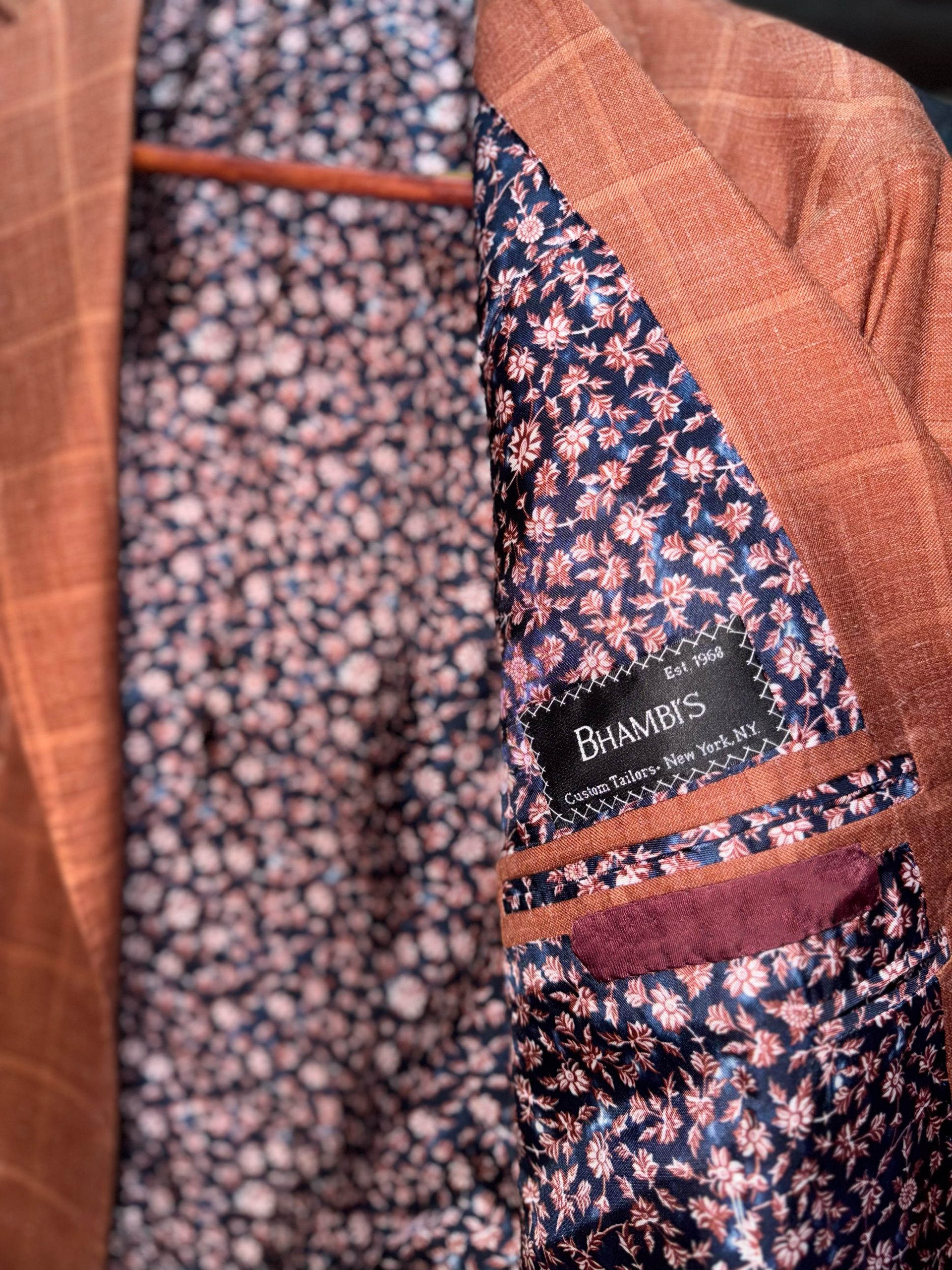
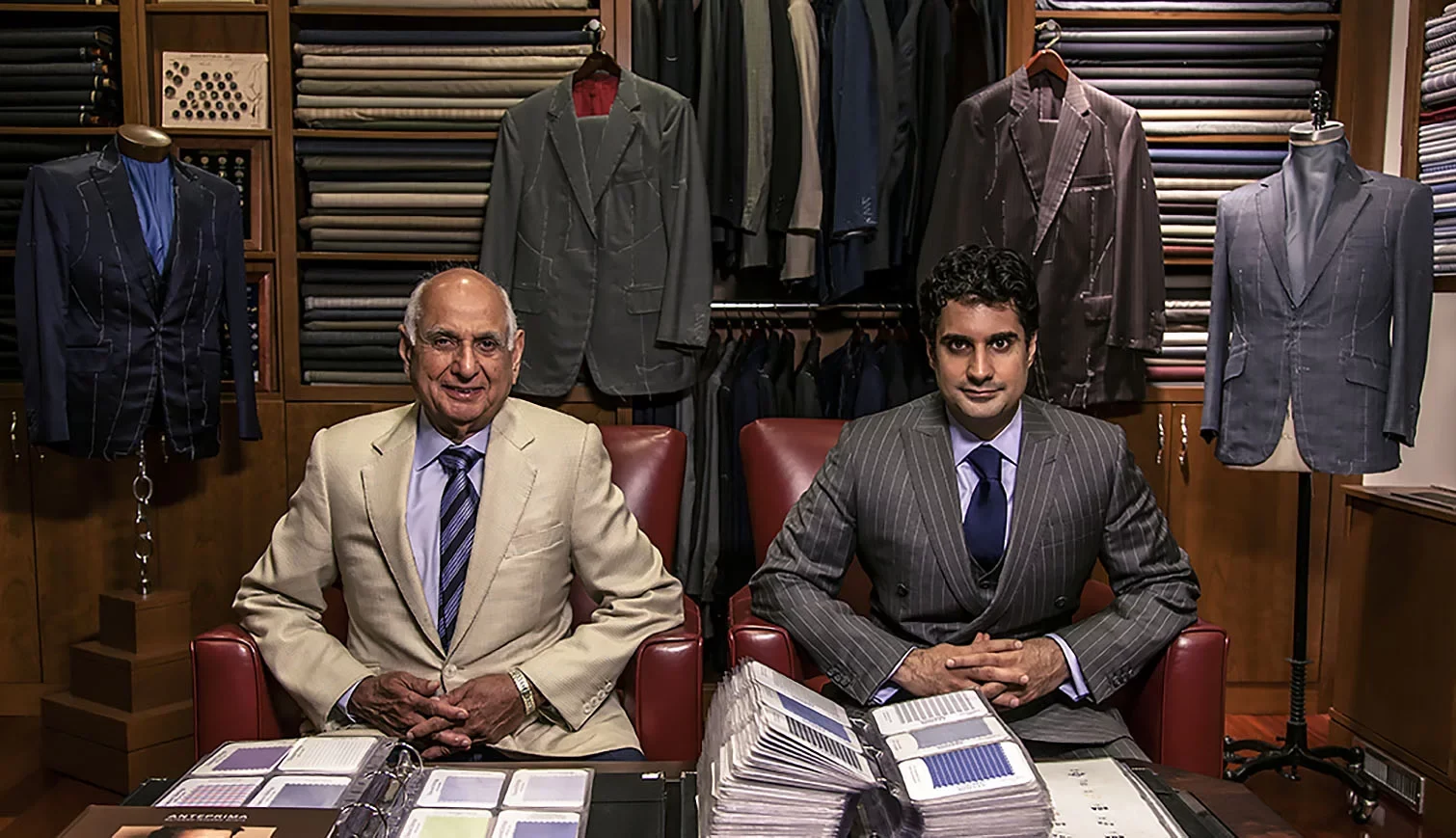
Bhambi’s Custom Tailors has operated from the same atelier at 14 East 60th Street, Midtown Manhattan, under continuous family ownership since 1968 — 57 years without interruption. That is a record no other major bespoke tailoring house in New York City can match.
3. Is the work performed in-house?
The word atelier implies a workshop — a physical space where the work is done. Not every shop that uses the word operates one. Some commission the construction of your garment to an outside workshop, a factory in another city, or overseas, and present the finished product as though it were made on the premises.
Ask: Is my suit cut and sewn in this building? If the answer involves any qualification — “mostly,” “the cutting is done here,” “our partner workshop” — that is not in-house bespoke tailoring.
At Bhambi’s, every garment is cut, constructed, and finished at 14 East 60th Street. Nothing leaves the atelier to be made elsewhere. The master tailor who takes your measurements is the same person who cuts your cloth and sews your suit.
4. Who are the tailors, and how long have they been doing this?
Bespoke tailoring is a craft that takes a decade to learn and a lifetime to master. The skill required to hand-draft a pattern, cut cloth with precision, and construct a full canvas suit by hand is not acquired in a training programme or a weekend workshop. It accumulates over years of daily practice under the guidance of experienced craftsmen.
Ask about the individual tailors — not the brand, not the founder’s biography, but the people who will actually work on your commission. How long have they been tailoring? Were they trained in-house or elsewhere? Have they worked under a single standard or moved between shops?
Bhambi’s in-house master tailors each bring over 30 years of individual bespoke experience. They were trained within the atelier and have worked to the same standard for their entire careers.
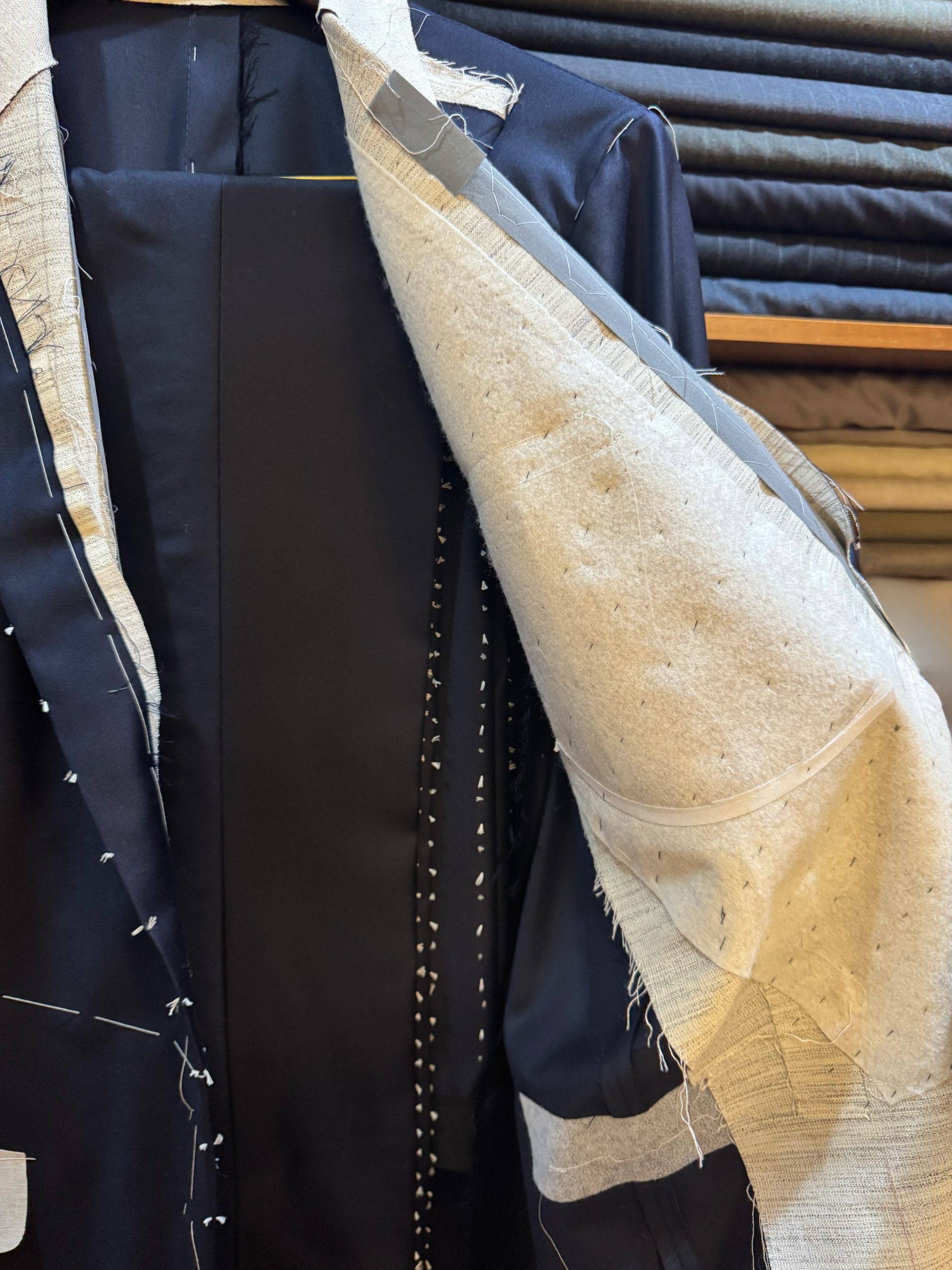
5. Does the tailor include a basted fitting?
A basted fitting is a temporary hand-stitched assembly of your suit — not the finished garment, but a construction that allows the tailor to assess structure, drape, and silhouette on your living body before a single permanent stitch is made. It is the step that transforms good tailoring into great tailoring, because it allows for refinements that no amount of measurement can anticipate.
Many made-to-measure operations skip this step entirely because it adds time and cost. A genuine bespoke tailor does not skip it. It is not optional — it is the point.
If a tailor cannot describe what happens at the basted fitting stage, or does not offer one, you are not looking at true bespoke.
6. What is the tailor’s fabric offering?
The quality of a bespoke suit is determined as much by the cloth as by the construction. A skilled tailor working with inferior fabric will produce an inferior suit. The world’s finest suiting fabrics come from a small number of British and Italian mills — Loro Piana, Holland & Sherry, Scabal, Ermenegildo Zegna, Fox Brothers, Dormeuil — and access to these mills at the depth and breadth required for genuine client choice is a meaningful indicator of a tailor’s standing in the industry.
Ask to see the fabric library. A serious bespoke atelier will have thousands of options across weight, weave, and fibre. A limited selection of house fabrics suggests a made-to-measure operation presenting itself as something more.
7. What happens after the suit is delivered?
A properly made bespoke suit is built to last decades. Your body, however, changes — weight fluctuates, posture shifts, lifestyle evolves. A tailor who stands behind their work offers alterations as part of the commission, not as an afterthought charged separately.
Ask what is included after delivery. The answer tells you how confident the tailor is in the longevity of the garment and the relationship.
Every bespoke commission at Bhambi’s includes two years of complimentary alterations. It is not a promotional offer. It is a reflection of the standard we hold ourselves to on every garment that leaves this atelier.
The Short Version
When choosing a bespoke tailor in New York City, ask seven questions:
- Do you draft my pattern from scratch?
- How long have you been in business under the same ownership?
- Is all work performed in-house?
- Who are the individual tailors and how long have they been doing this?
- Do you include a basted fitting?
- What is your fabric offering?
- What is included after delivery?
A genuine bespoke tailor answers all seven without hesitation. Anything less is a compromise worth understanding before you commit.
Bhambi’s Custom Tailors has practised true bespoke tailoring at 14 East 60th Street, Midtown Manhattan, since 1968. To begin your commission, call (212) 935-5379 or visit our showroom steps from Fifth Avenue and two blocks from Central Park.